Tech Is Getting Weird Again, and That Might Be a Good Thing
From an expanding laptop screen to a folding projector, IFA 2026 shows manufacturers experimenting with hardware shape again — and that's worth paying attention to.
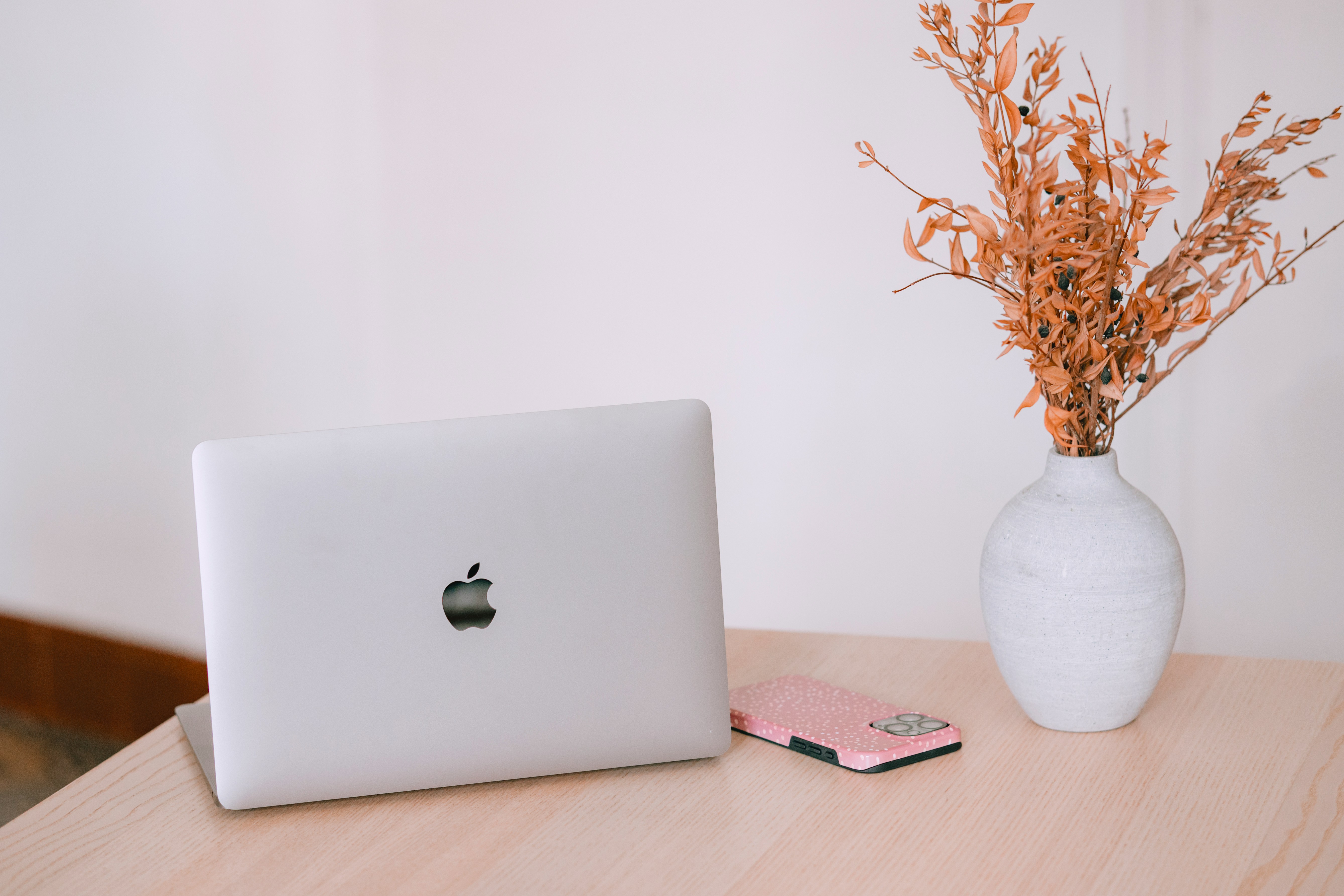
For a while, consumer technology started to feel strangely predictable. Phones became slightly faster versions of last year’s phones, laptops became thinner versions of last year’s laptops, and many new gadgets seemed to compete mostly on specifications that were getting harder to notice in everyday use.
Some of the hardware shown at IFA 2026 suggests that manufacturers are starting to experiment again. Instead of simply adding another camera or a faster processor, companies are playing with what these devices can physically become. That does not mean every strange idea will survive, but it makes technology considerably more interesting to watch.
Lenovo wants your laptop screen to grow
One of the more unusual concepts came from Lenovo. Project Swan looks like a fairly normal 14-inch laptop when closed and carried around, but its display can expand into a 17-inch widescreen when more space is needed.
The idea is surprisingly practical. A larger screen is useful for editing, spreadsheets, multitasking or simply putting two windows next to each other, but carrying a 17-inch laptop everywhere is not particularly appealing. Lenovo is trying to offer both without requiring a second monitor.
The company says the concept remains 17.9 mm thick and weighs 1.6 kg, which makes the idea much less absurd than it might initially sound. It is still only a proof of concept, so there is no guarantee you will be able to buy one, but that is almost beside the point. It shows manufacturers are still willing to rethink the basic laptop shape rather than accepting that a screen and keyboard have reached their final form.
A projector that folds into your bag
Aurzen took a similar approach with something completely different. Its new ZIP Pro is a portable Full HD projector built around a tri-fold design that also acts as its own adjustable stand.
Folded, the projector measures 115 by 97 by 44 mm and weighs 586 grams. It has a built-in battery, USB-C video input and native 1080p resolution. Aurzen rates the battery for up to 2.5 hours in its ECO mode, although its 200 ANSI lumens of brightness mean this is clearly a gadget intended for darker rooms rather than replacing the television in a bright living room.
What makes it interesting is not really the specification sheet. It is the fact that the design solves one of the annoying problems with small projectors: figuring out where to put them. Instead of carrying a tripod or balancing the projector on a pile of books, the body itself becomes the stand.
That is the sort of improvement that sounds obvious only after somebody actually builds it.
Even the external SSD is changing shape
Then there is the Lexar Muse, which proves that apparently even external storage has room for experimentation.
The Muse is shaped more like a thin card than a traditional portable SSD. Lexar says it measures around 3.8 mm at its thickest point and tapers to just 1 mm around the edge. A magnetic sleeve lets it attach to compatible MagSafe iPhones, while a magnetic data connection links the drive to its cable.
Despite the unusual shape, Lexar says it can reach read speeds of up to 1,050 MB/s and write speeds of up to 1,000 MB/s. The drive is expected in 512GB and 1TB versions later this year.
It is a small product, but it reflects the same idea as Lenovo’s expanding laptop and Aurzen’s folding projector. Instead of treating hardware design as a solved problem, companies are asking whether familiar products could fit into our lives differently.
Weird hardware is more fun than another specification bump
None of these devices is guaranteed to change the industry. Project Swan may never become a commercial laptop, a folding projector is still a fairly niche product, and most people probably do not wake up wishing their SSD were thinner.
But technology does not always need to produce the next revolutionary device to feel exciting.
There is something refreshing about seeing companies experiment with physical design again. Faster processors and better battery life are useful, but they rarely change how a device feels to use. A screen that grows when you need it, a projector that becomes its own stand or storage that almost disappears behind your phone can.
Some of these ideas will probably fail. Others may quietly become normal a few years from now.
Either way, tech getting a little weird again is much more interesting than every new device looking exactly like the one it replaced.
Provenance
- How this was made
- Original reporting and writing by Webitlio.
- Reviewed by
- Nicolae Panait
Corrections
- — Simplified photo credit to platform-only attribution per updated stock-photo policy.